SmartSat’s Scarlet-β (Beta) project has developed autonomy for the next generation of intelligent small satellites with algorithms for faster, more adaptive mission planning. The autonomy was matured and demonstrated on the Defence Science & Technology Group (DSTG) Buccaneer Main Mission. The project is part of SmartSat’s Scarlet Lab program, focused on spacecraft autonomy and intelligent mission operations.
Led by Professor Salah Sukkarieh at the University of Sydney, with collaboration from Defence Science & Technology Group (DSTG), Scarlet Beta explored how spacecraft can make more effective decisions with less reliance on constant human oversight. The project was formulated by SmartSat Chief Research Officer, Dr Carl Seubert, and SmartSat Professorial Chairs with the aim to demonstrate goal-oriented autonomy in orbit. As a path to using autonomy layers to tailor and adapt an existing mission to a new application and expand spacecraft autonomy to DSTG mission operators, the Scarlet Beta project on Buccaneer Main Mission (BMM) arose.
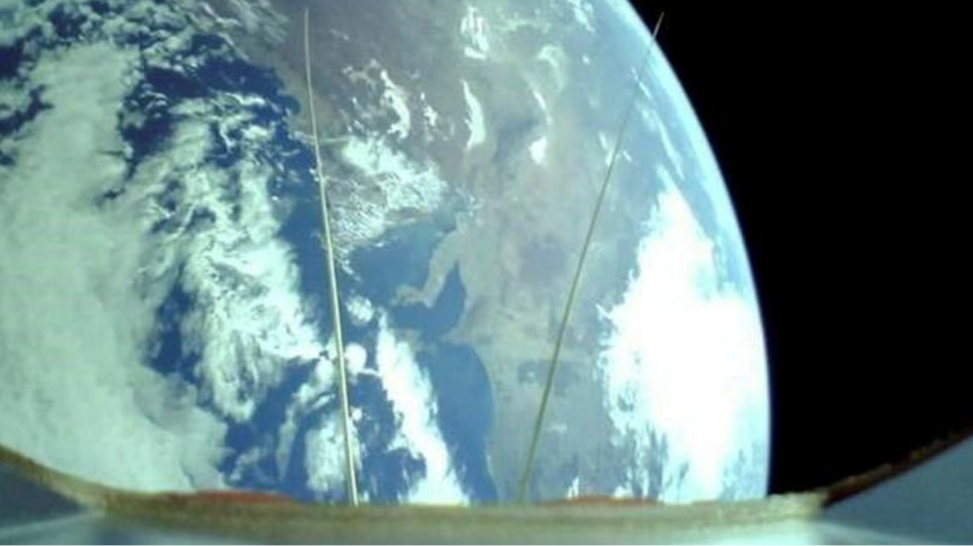 The South Australian coastline captured by Defence Science and Technology Group’s nanosatellite, Buccaneer Main Mission, using its secondary system, the Manoeuvrable Antenna and Terrestrial Imaging System. Source: Australian Department of Defence (2025, October 8)
The autonomy approach was developed for DSTG’s Buccaneer Main Mission and its MANTIS payload, which supports satellite self-inspection and Earth observation imaging. The intent is to combine optimisation and machine learning techniques to automatically determine the best next action and perform self-assessment during a mission. Across its two phases, Scarlet Beta progressed from core planning algorithms and simulation through to mission-relevant testing, including integration with hardware and ground-based mission environments.
DSTG recognised the first phase as a strong foundation for further development, with the project moving from simulation toward hardware-in-the-loop and on-orbit demonstration activities. The collaboration is a strong example of how SmartSat CRC has brought together research excellence, end-user insight and mission opportunities to accelerate Australian space innovation.
A key outcome has been an autonomous planning system designed to schedule imaging opportunities while accounting for spacecraft resources, timing and mission priorities. The system was designed to support both self-inspection imaging and Earth observation, helping maximise the value of data collected from orbit.
The project has also helped build valuable national capability. By testing advanced autonomy concepts in the context of a real Australian Defence space mission, Scarlet Beta has strengthened local expertise in mission planning, intelligent spacecraft operations and trusted autonomy for future space systems.
As satellites become more capable and missions become more complex, autonomy will play an increasingly important role in making space systems more responsive, efficient and resilient. Scarlet Beta is a project within the SmartSat CRC’s Scarlet Lab program – dedicated to developing and advancing Australia’s technologies in spacecraft autonomy and onboard AI.
Scarlet Beta is another example of the strong body of work developed through SmartSat that lays foundational capability to expand at the Australasian Space Innovation Institute (ASII). ASII through SmartSat is helping position Australia at the forefront of intelligent space systems that are more responsive, efficient and resilient.